
Against Explaining
On technique, intuition, and why art doesn’t need to justify itself.

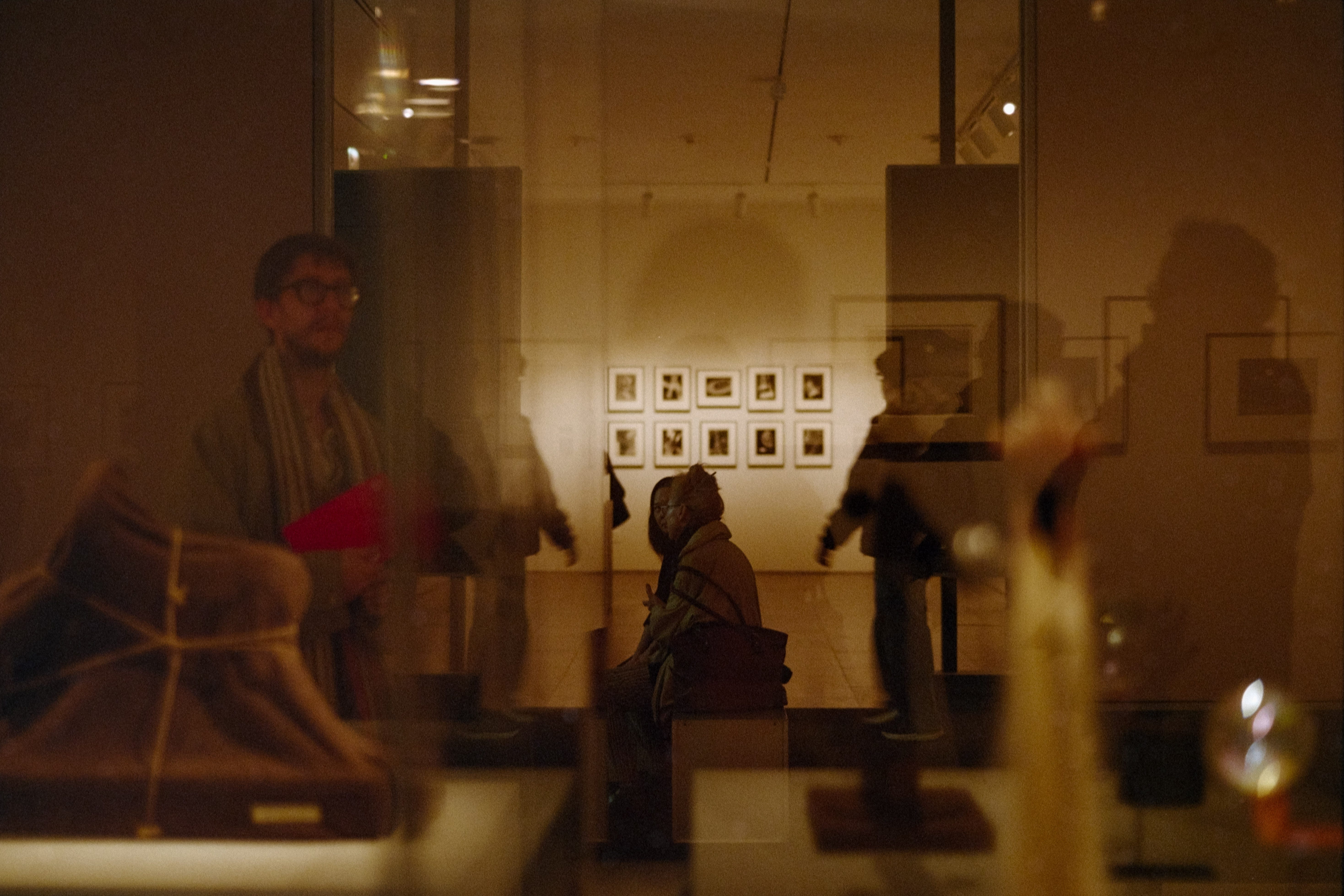
I’ve been staring at the long lists of substack drafts on my dashboard for a while now. Each draft a vague concept just waiting to be picked up. Things like “technique vs. intuition”, “photography, my spirituality”, and “against explaining” have been circling through my mind, but never quite solid enough for me to tackle them. What I’m realizing is that these ideas are all expressions of the same instinct: a desire to protect unknowing as an essential part of making and experiencing art.
I don’t struggle with inspiration as much as I struggle with permission. Permission to not fully understand what I’m making. Permission to trust intuition over explanation, feeling over fluency. The longer I work in photography, the more I notice a quiet tension running through my practice—between learning how to do things “right” and protecting the instinct that made me pick up a camera in the first place.
Technique vs. Intuition
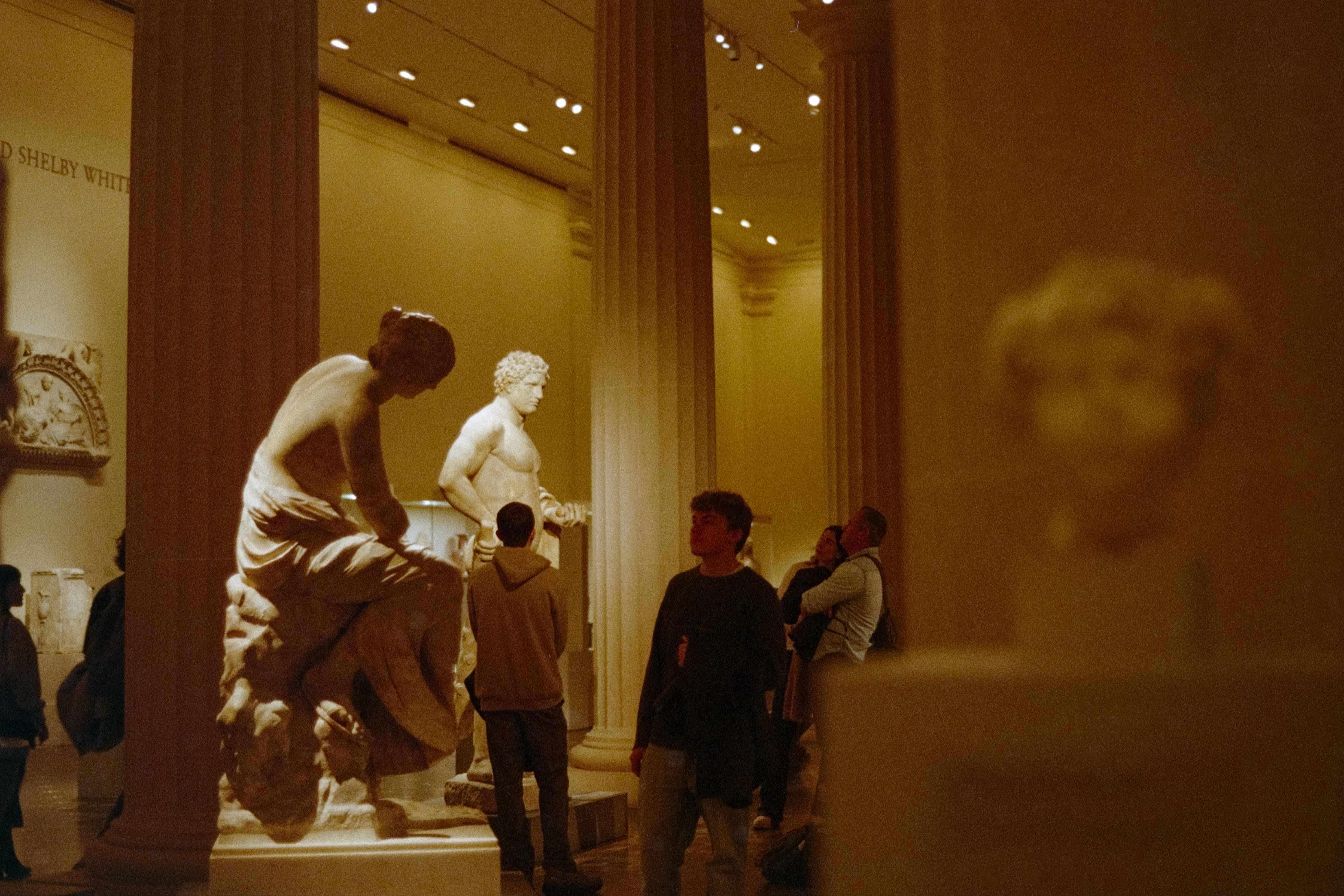
Too much gear talk and I zone out, too much editing and I lose interest. I’ve always been more of a learning by doing person and I’m willing to take the risk to mess up. That’s part of why I love shooting on film, because I like to mess up occasionally and get surprised by happy accidents other times. However, too little interest in the technical side of the craft and it shows. The success rate drops and I also lose the joy in taking photos. Over the years, as my photography has slowly improved, I have been raising my expectations on my own work and I can no longer get around improving my technique. Which in turn, leads to the fear of losing my intuition, my creative mind when creating.
Technical knowledge can sometimes limit the creative freedom or make me hesitant in an impulsive moment — like seeing a fleeting moment on the street I’d love to capture but second guessing the focal length or speed of the film.
There are photographers out there, who are absolute masters of technique, real craftsmen and -women, but seem to have traded their intuition for skill, their emotion for knowledge. I don’t believe it is necessarily one or the other, but I do think finding one’s own balance is key.
Photography, my spirituality
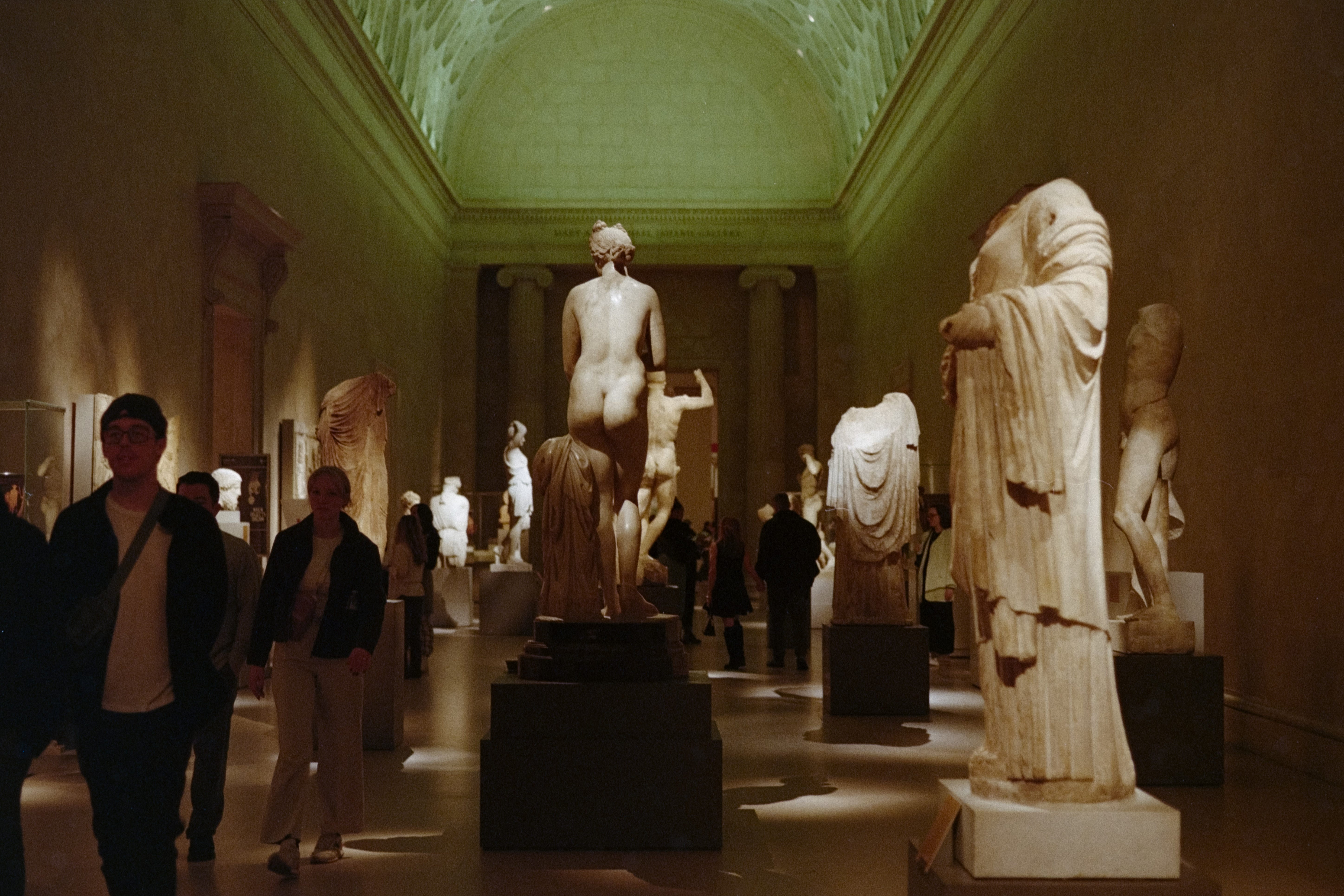
This is where the question of technique and intuition transforms into the topic of spirituality. As an atheist, I don’t feel the need for a belief system around life and death. Life on our planet makes sense enough for me to accept it as it is, without the need to add a spiritual aspect to it. When it comes to art, however, I like to move in the spaces in-between. The unknown, the illogical, the incomprehensible. Visiting museums feels like what I imagine going to church feels for others. The fact that looking at an image can cause an intense emotional reaction, or that reading a poem written by someone else a few hundred years ago can trigger something inside of us is fascinating to me.
And those reactions are not rooted in the technicalities. They’re not triggered by the image’s exposure or the poem’s rhyme scheme. Those result from something personal, something human, something I can’t quite explain and I love that I can’t. Art has the power to create a meeting point between the inner world of the artist and the inner world of the viewer. Human connections across distance and time, between people who will never meet, may not even be alive at the same time.
Is this something “higher than us”? Debatable. Perhaps not, because it is coming straight from our minds, it’s our knowledge, experience, emotion and imagination whipping up a piece of art. But it also needs the mind of the audience interpreting the piece with their own unique combination of knowledge, experience, emotion and imagination. So perhaps, it’s fair to say it is higher than each individual one of us, needing always two minds to create the perception and response to art. But it is not higher than the collective us.
Creating, each time, a unique connection between two humans, regardless of physical space or presence. That’s peak spirituality to me.
Against Explaining
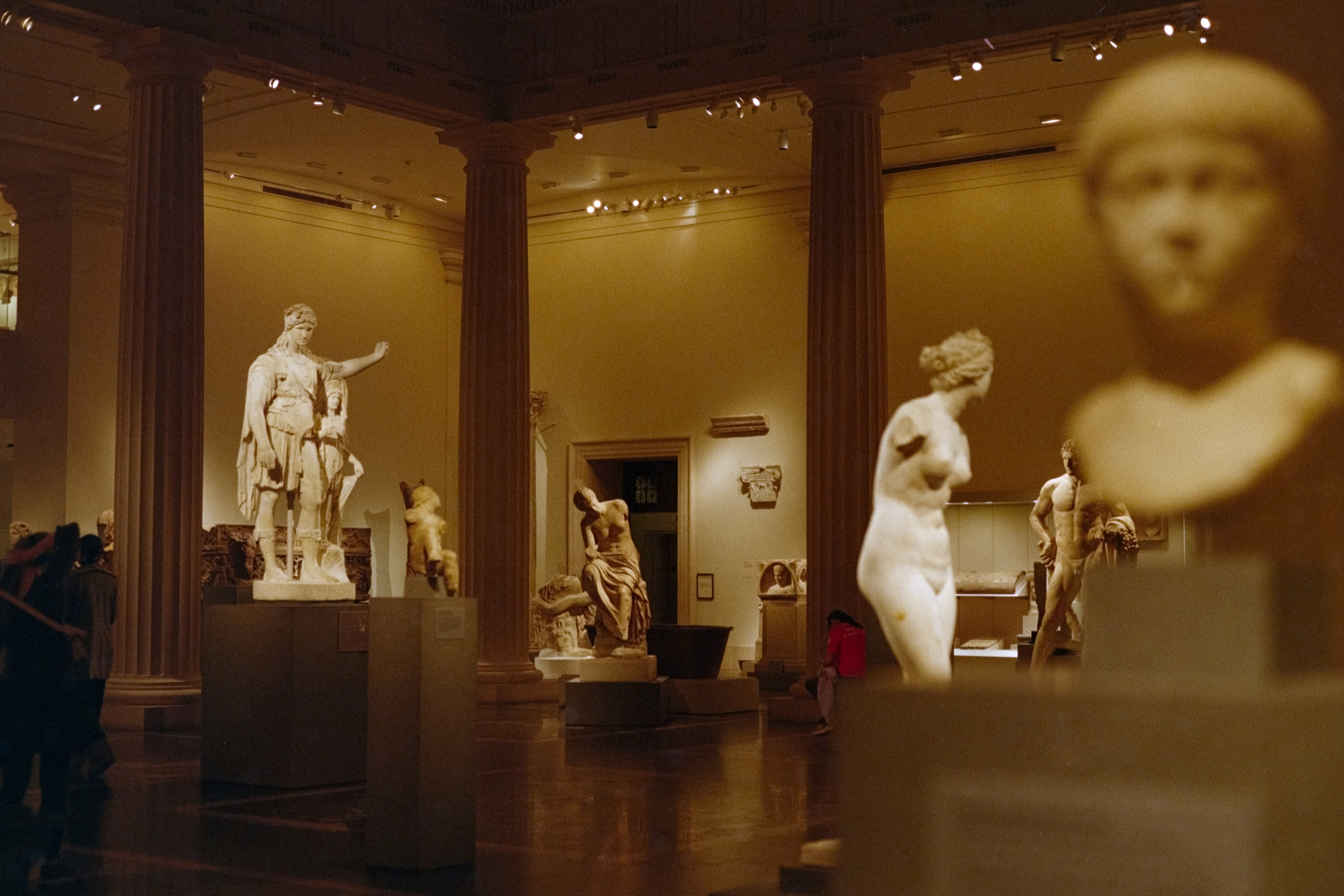
Which brings me to my third idea: Against Explaining. I heard the author Caroline Funke, raise the question on a podcast: “Why do we have the desire to pick apart anything we admire?” And I couldn’t agree more. When it comes to art, I love not knowing. Only feeling. I love movies, others may call boring or slow, and say “nothing happens”. I love music like Bon Iver, because I don’t understand what’s going on, what instruments or machines are creating these sounds, but I love the mood it puts me in. In fact, I believe most art is better when it’s not explained. When it holds some magic.
I studied English Literature in college, and I quickly found myself in the camp of “death of the author”, arguing that a piece of art should stand and work on its own, the author’s intentions and context are secondary. Isn’t the beauty of a book to let it happen and see what it does to you without knowing what the author intended to happen? Isn’t it an even bigger win for the author when the work lives on its own and does things on its own, not needing any foreword?
It seems to me like the world we live in right now is pushing us out of ever being in a moment of unknowing. With YouTube tutorials and chatgpt’s alleged answers to anything at all times at our fingertips, we hardly ever create or experience art purely emotionally.
What if, from time to time, we allow our intuition to lead, both in creating and experiencing art, without immediately asking to justify itself? If we are not afraid to enter unknown, unexplainable spheres in creating and receiving it, and if we hold off trying to understand the process and technique just a little longer to just focus on its effect on us? Could we, perhaps, also come to an understanding of it? Could we still know a painting even if we don’t know its intention?
In a world, where explanation, verification, and optimization are increasingly necessary, perhaps art can be the space where we can develop and learn to trust our own intuition.
Thanks for reading,
<3
Birgit
This was great, and something ai have struggled with myself. While learning the technical side of photographing it became a challenge to let go and shoot what moved me, all the while the photographs I loved weren’t technical masterpieces but full of emotion and feeling. Just recently after years of shooting I am intentionally leaning back into the emotional side of the craft and trying to focus on capturing the magic no matter the settings.
Thank you! I have always felt in a similar way to you. I have felt when I try to get too into the technical part of things I get bored and not creative. You need to know certain things, true, but also give room to experiment and explore your own ways.
And certainly resonate so much with your last argument. In a way I think I struggle to explain with words my thoughts, as you might see here, even tho I’m as avid reader, but visually I can do that better, in a way that’s is intuitive, which sometimes makes it hard to share things, when people ask, why did you do this or that…I feel like in the fear of that I just hold my work.